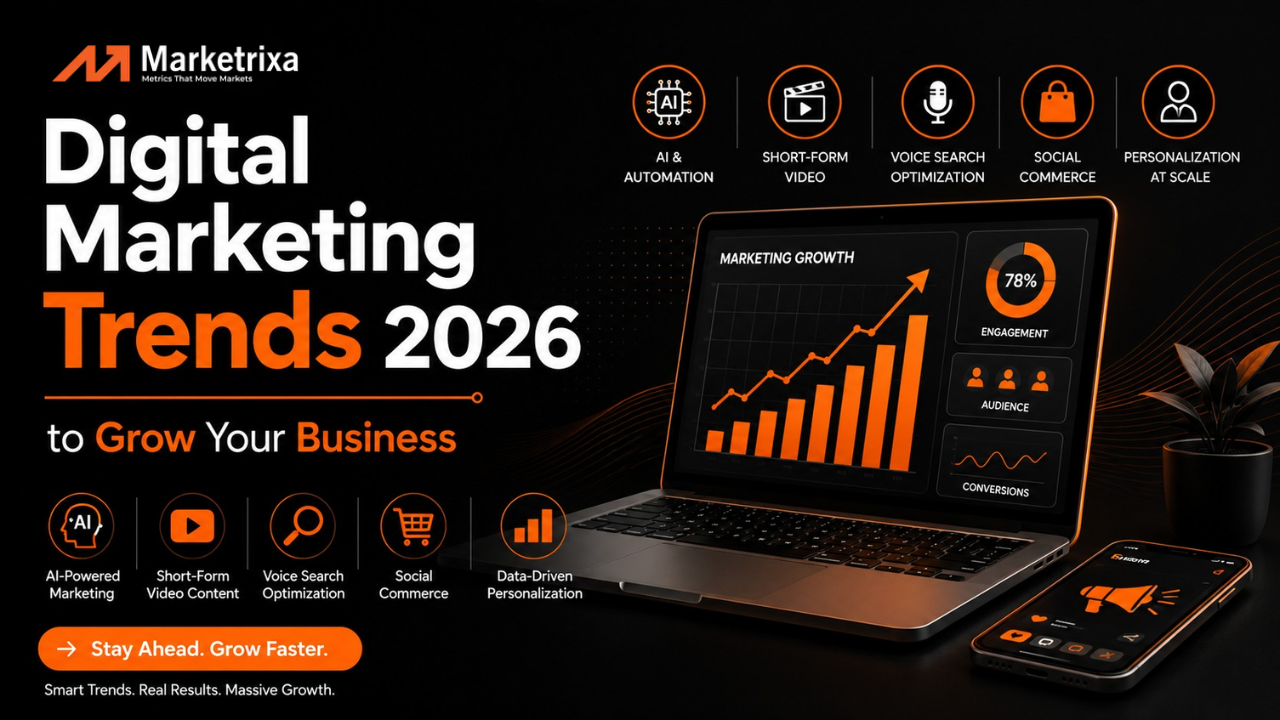
Rapid evolution has once again characterized the marketing landscape, and 2026 has made this truer than ever, with many companies left unprepared for the marketing revolution. All levels of the marketing framework now incorporate artificial intelligence. User needs continue to develop and shift. Privacy policies are becoming increasingly stringent. Channels that dominated just two years ago are now being newly created, substituted, or supplemented.
Proper knowledge of display vs. non-display marketing during the year is crucial for a correct understanding of which trends will provide business growth vs. which trends are just marketing buzzwords. The 7 Digital Marketing Trends for 2026 outlines leading trends and what your business or organization can do to leverage them now.
We are happy to have the opportunity to implement our own research in these spaces. Data and past trends show that organizational and business growth comes with marketing growth in the areas of current needs, preferences, and user focus. We have gone beyond the pandemic and disruptions.
Trend 1: AI-Powered Personalization at Scale
Personalization has been around for decades but is finally starting to hit its peak with the help of generative AI in 2026. Users are now receiving the most relevant content possible, without human touch, thanks to the technology's ability to analyze data and generate email sequences and product suggestions.
The business world has changed in profound ways. Instead of an entire demographic group of "25-34 year old fitness enthusiasts," businesses can now focus on "users that best respond to social messaging on Tuesday mornings and who were looking to buy running shoes at 8 pm last night." This new, razor-sharp focus was impossible to achieve, let alone sustain, at this scale, and has truly revolutionized the world.
Beginning now is imperative. Check your advertising and email systems to see what new tools are already built-in. Create ways to collect first-party data. Personalization is only as good as the data that drives it. Experiment with traffic source-based dynamic landing pages to see varied and personalized headlines and calls to action.
Trend 2: Search Generative Experience & AI-Driven SEO
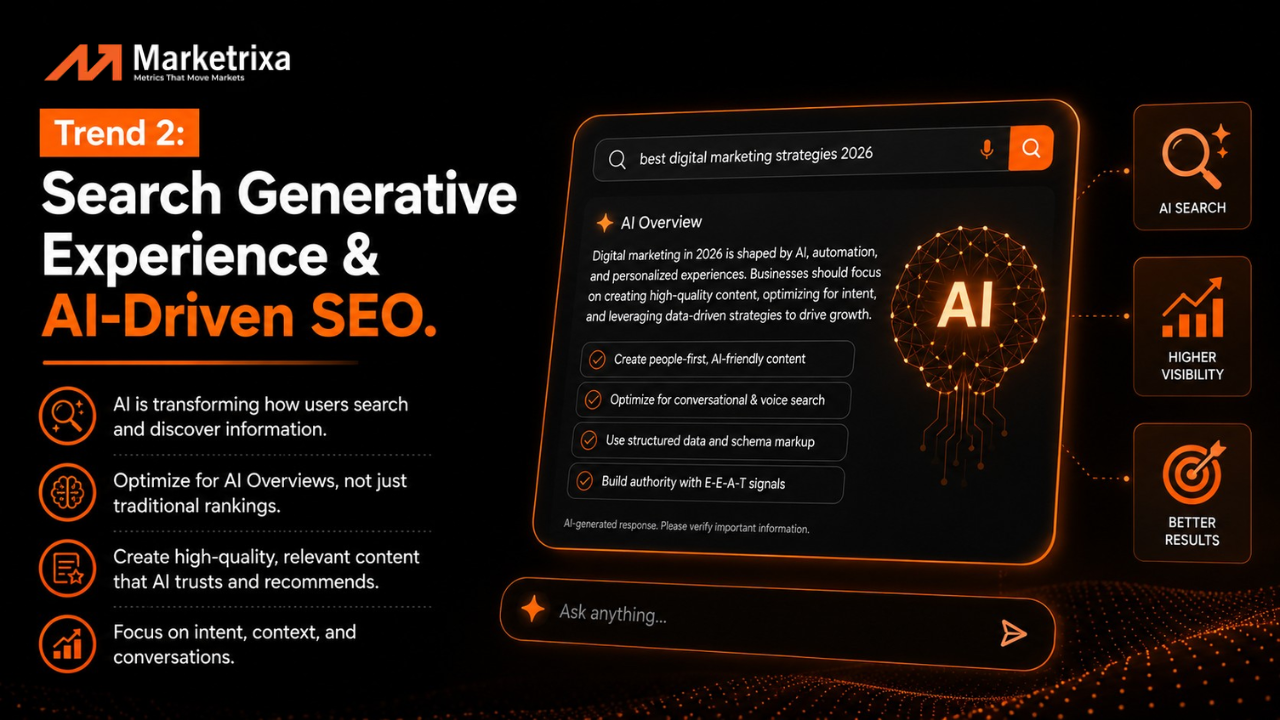
With Google AI Overviews and AI-native search engines becoming more popular, search ranking systems are becoming more complex. The click volume on website links has decreased, and users are more inclined to follow transactional or navigational pathways. This is happening because search engines now generally answer the majority of information requests directly on their result pages.
The new SEO model requires you to be recognized by the AI systems instead of just landing a position in the top ten blue link results. This model requires strategically organized and richly detailed content, earned links from other websites, and ensured accessibility of your website to AI indexers.
What to do: Establish a website with primary content relating to your publishing niche. Apply structured data in the form of Schema so that AI systems interpret your content and cite it directly. Finally, optimize your content for E-E-A-T, which means Experience, Expertise, Authoritativeness, and Trustworthiness.
Trend 3: Short-Form Video Dominates Every Channel
All major platforms have adopted short-form videos. If your brand or company is not using short-form videos for customer or brand engagement, your customer acquisition cost will be higher than your competitors that are using them. This will not only apply to retail brands. Short form videos are also useful for B2B brands. Videos that explain your service or product, or are about the founder, or give a behind-the-scenes glimpse are better at engaging potential customers than whitepapers or infographics.
From my experience, a lot of brands are afraid to implement video marketing just because they do not think they can keep a consistent video posting schedule. Long-form videos can be segmented into several short videos. Each of these can be used on different platforms. Always add captions to your videos because most videos on social media are viewed without audio.
Trend 4: Zero-Party & First-Party Data Strategies
Brands that could establish direct connections with their customers in a world without third-party cookies and with increasingly stringent privacy laws will emerge as leaders by 2030. Now, data from participants is the most valuable data.
The best way to collect zero-party data is to provide users with value. Value can take the form of quizzes, surveys, gated content, and many others. In addition to providing value to the user by collecting zero-party data, a brand can also build an infrastructure using first-party data. This infrastructure can consist of a loyalty program or an email list. This program will set the brand apart in a way that paid media can not.
In order to gain a competitive advantage, brands should create a value exchange where consumers will provide their preferences in exchange for something helpful. Create a Customer Data Platform to pull all your data sources to one place. Regularly assess the compliance of your data collection methods to help build user trust.
Trend 5: Conversational Marketing & AI Chat Agents
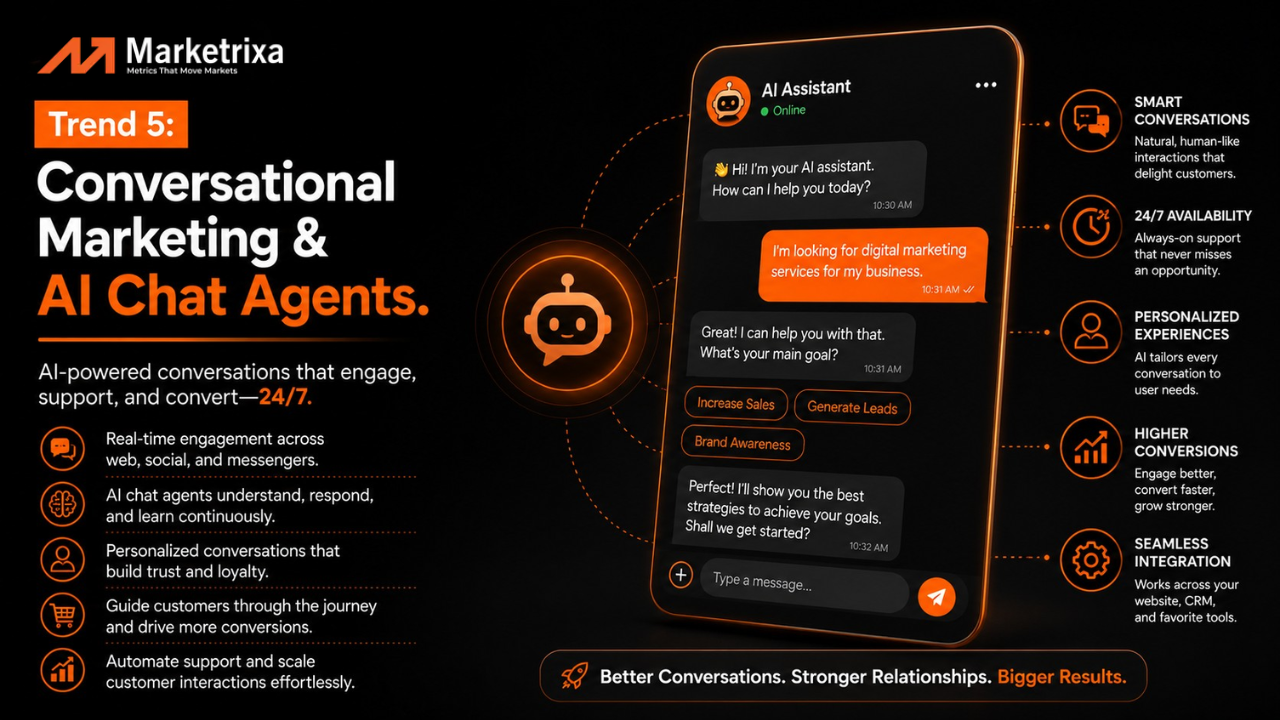
Conversational agents can do more than just track support tickets; they can handle entire sales and support journeys from beginning to end. In 2026, businesses that implement advanced chat agents will show a marked decrease in lead response times and an increase in sales conversion rates, especially for sales that involve a higher level of customer consideration and questions
The best implementations look at AI agents as brand ambassadors well-trained, well-informed brand agents who engage consumers for real conversations. These implementations of AI agents save a significant amount of money.
What to do: Answer your top 5 customer questions and ensure that your AI agent will provide those exact answers. Embed your chat agent with your CRM. This allows personalization of customer journeys/events based on past interactions. Ensure that your customer AI agent will transfer the customer to a human if it cannot engage the customer for a conversation
Trend 6: Influencer Marketing Matures Into Creator Commerce
Influencer marketing has matured. In 2026, the most successful programs will emphasize ongoing partnerships with creators that include embedded commerce, instead of paid posts. Social media companies are inventing ways to integrate shopping features into affiliate programs, making creator posts instantly shoppable and decreasing the distance between a user discovering a product and subsequently purchasing it.
For most industries, nano (10k–100k followers) and micro influencers outperform mega influencers in engagement and conversion, as they are better at communicating and building relationships with their audience. A trade-off of this will be a loss in reach; however, companies are choosing to engage several different micro-influencers as opposed to a single large influencer. Marketrixa comments that this is a high-impact, high-return tactic for companies with small budgets and limited promotional periods.
Change the way you think: Instead of purchasing one-off ads, create long-lasting partnerships with influencers; the ads improve over time. Instead of measuring metrics like impressions, focus on actions generated, such as clicks, saves, and conversions. To improve computing affiliate traffic, let creators advertise through affiliate codes. This will both simplify measurement and help set goals.
Trend 7: Omnichannel Automation & Unified Customer Journeys
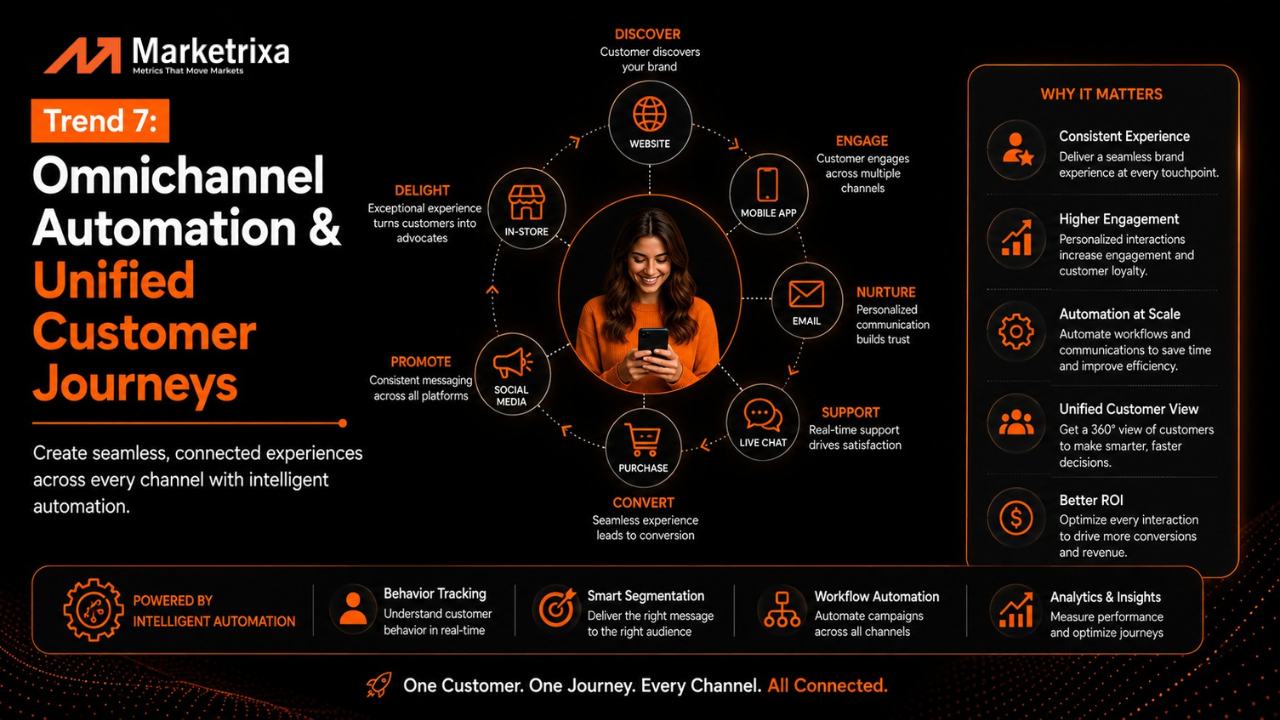
In the year 2026, customers connect to brands and businesses more than ever. They have the ability to do this in an endless number of ways, including social media (Facebook, Instagram, TikTok, Twitter, etc.), through a search (Google), email, SMS, through apps, in physical stores, or even via podcasts. Companies taking advantage of this and linking these pieces/ways of contact to a cohesive automation step to take advantage of each one is where the growth is being seen.
Commercial marketing automation systems are becoming more and more advanced and complex. The ability to carry out automated marketing campaigns across a variety of systems and marketing channels, such as email, web, SMS, direct mail, retargeting, and push notifications, is now in the hands of marketing professionals. Marketing systems can now be used to execute complex workflows for a variety of marketing functions, such as cart abandonment or online ad views that go unwatched and unclicked
What to do: The first step should be to determine your business's assets to establish what you have at your disposal for marketing automation under the current systems. Using the customer journey as a starting point, constraints should be placed on marketing channels to limit customer contact frequency.
The Bottom Line
Deep customer understanding and precision are the cornerstones of highly rewarded businesses and platforms in the marketing realm. This is seen in multiple trends for 2026, including AI personalization, first-party data strategies, or creator-led commerce. All translate on the basis of genuine relevance.
It is unnecessary to deal with all 7 trends. Focus on two or three trends that align with your core purpose, customer, and employee interests. Consistency and focused execution will outperform dealing with the trends in a tactical and varying manner
Marketing experts at Marketrixa agree and state that companies that have an ‘amazing’ 2026 will be those that use this marketing approach, resist the urge to quickly jump on the next novelty platform, and tackle only a few trends but do them in a great way.